
Books
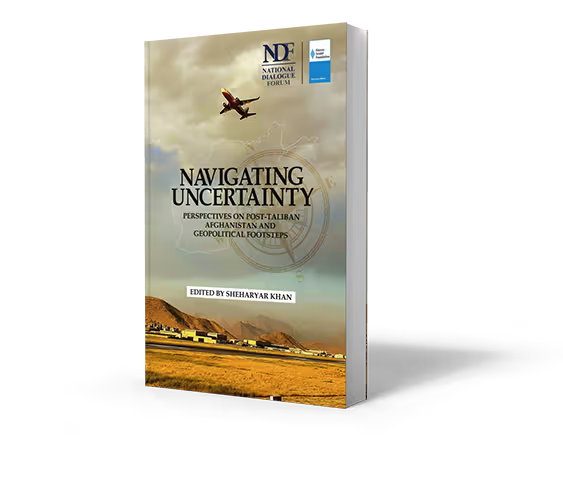
I have contributed a chapter to the book Navigating Uncertainty: Perspectives of Post Taliban Afghanistan and Geopolitical Footsteps, co-produced by The Hanns Seidel Foundation and National Dialogue Forum.
The book is a collection of essays written by several of the foremost experts on Afghanistan.
In my chapter entitled To Recognize or Not To Recognize: That is The Question. Or is it? I break down the arguments, risks, and potential benefits of deeper engagement with Afghanistan under Taliban rule. The chapter challenges commonly held beliefs and errors surrounding the issue of recognition, questioning whether it's truly necessary for increased involvement within the country.
This analysis is especially important now, as the Taliban have held power for nearly five years and on-the-ground conditions indicate that continued U.S. and European isolation is fueling a more regressive rule and worsening instability in Afghanistan and beyond.

In early 1986 Kathy Gannon sold pretty much everything she owned (which wasn't much) to pursue her dream of becoming a foreign correspondent. She had the world to choose from: she chose Afghanistan. She went to witness the final humiliation of a superpower in terminal decline as the Soviet Union was defeated by the mujahedeen. What she didn't know then was that Afghanistan would remain her focus for the next eighteen years. Gannon, uniquely among Western journalists, witnessed Afghanistan's tragic opera: the final collapse of communism followed by bitterly feuding warlords being driven from power by an Islamicist organization called the Taliban; the subsequent arrival of Arabs and exiles, among them Osama bin Laden; and the transformation of the country into the staging post for a global jihad.
Gannon observed something else as well: the terrible, unforeseen consequences of Western intervention, the ongoing suffering of ordinary Afghans, and the ability of the most corrupt and depraved of the warlords to reinvent and reinsert themselves into successive governments. I is for Infidel is the story of a country told by a writer with a uniquely intimate knowledge of its people and recent history. It will transform readers' understanding of Afghanistan, and inspire awe at the resilience of its people in the face of the monstrous warmongers we have to some extent created there.

